How Smuggled AI Chips Ended Up in a Chinese State Network
Security researchers discovered 32 restricted Nvidia processors within China Telecom's infrastructure, prompting a debate over the scale of illicit hardware transfers.
By Ama Boateng ·

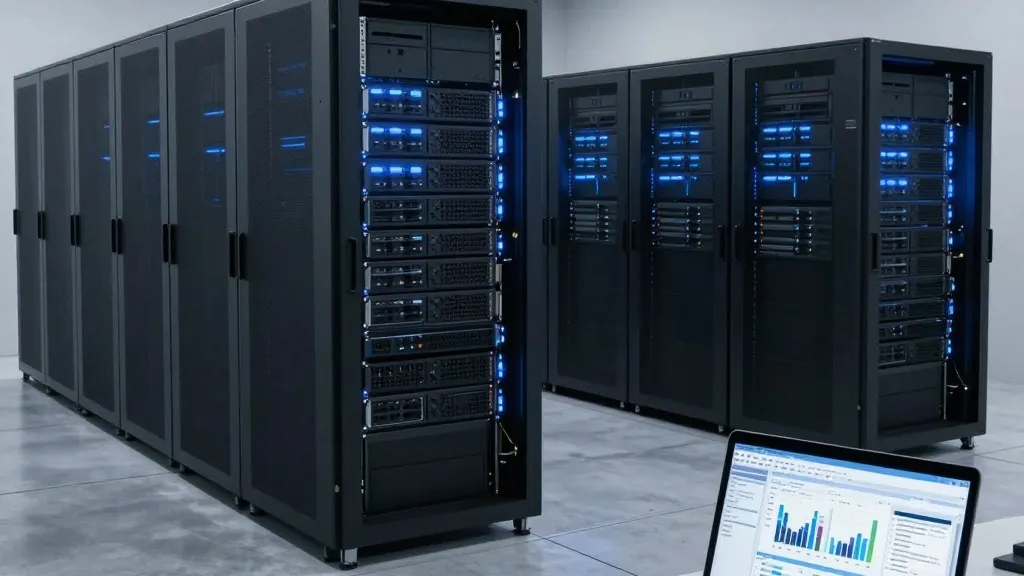
Security researchers in Israel have revealed that 32 Nvidia Blackwell Ultra B300 graphics processing units are currently operating within the internal network of China Telecom. The telecommunications giant is a state-owned entity responsible for providing services across the country. The discovery is significant because U.S. export controls have recently prohibited the sale of these specific high-performance chips to Chinese entities, raising immediate questions about how they bypassed such strict regulations. According to a report from The Information, these chips are only permitted for sale to buyers on an approved list who agree not to transfer them to sanctioned parties, including those located in China.
The presence of these processors is not an isolated incident in the history of chip trade restrictions. In 2025, reports indicated that Chinese firms successfully smuggled approximately $1 billion worth of Nvidia AI hardware into the country over a three-month period. During that timeframe, the B200 chips were the most coveted items, but distributors were already preparing to move B300-series units as soon as they became available. This latest finding suggests that the flow of export-controlled technology into China remains a persistent challenge for regulators and manufacturers alike.
Nvidia has responded to the news with a tone of measured dismissal. While the company did not deny the findings presented by the security firm, a spokesperson characterized the incident as minor in the broader context of global computing resources. The spokesperson stated that recent court cases have shown the diversion of controlled U.S. products to be insignificant, amounting to less than half of one percent. They described this volume as a drop in the bucket compared to the vast amount of domestic compute power China already possesses, asserting that with tens of millions of GPUs in service in approved countries, smuggling remains a non-factor blocked by governments on both sides of the globe.
The exact path the B300 chips took to reach China Telecom’s server racks remains unclear. The security firm, Lava, could not pinpoint the specific location within the company's network where the chips are housed. However, they confirmed their presence using Nvidia’s own DCGM Exporter tool. This software is designed for data center operators to monitor server health and performance. Although intended for internal use, the tool can sometimes be accessed from outside the data center's network. Notably, it does not always require password authentication, a security quirk that likely facilitated the discovery. Nvidia has previously confirmed it is developing a dedicated tool to help locate its chips, but that release has yet to occur.
Chinese firms have a strong incentive to acquire the Blackwell Ultra B300, which was announced in March of last year. It is one of the most powerful data center GPUs available, offering 50% more memory and FP4 compute capability than the previous-generation B200. At the time of its announcement, Nvidia described the chip as built for the age of reasoning, referencing sophisticated AI large language models such as DeepSeek R1. The B300 was initially expected to ship by the end of 2025, and it quickly became a highly sought-after commodity in the market.
The smuggling of these high-end chips has led to legal consequences in recent months. In August 2026, nine individuals were indicted in Taiwan for the illegal export of B300 GPUs to China. This action came just days after Supermicro, a major server maker, confirmed it had terminated several employees following an internal investigation into smuggling activities. The complex operation involved a Taiwanese server trading firm known as Flying Tiget Tech, which held the necessary whitelisted status to purchase the GPUs legally before they were diverted.
The critical nature of Nvidia’s chips to AI data centers has also driven up prices for older hardware. The company’s A100 servers, which are five years old, have seen their prices triple, with some units costing up to $82,000. The ongoing crackdown on smuggling has even led some operators to retool gaming graphics cards to handle AI workloads where possible, highlighting the intense demand for compute power that continues to shape the global tech landscape.
As the situation unfolds, the focus now turns to how effectively governments and companies can close the gaps in export controls. The discovery within China Telecom’s network serves as a reminder that while high-profile seizures make headlines, the underlying mechanics of global chip trade remain complex and vulnerable to exploitation by well-connected networks.
Source: Tom's Hardware